
Mash
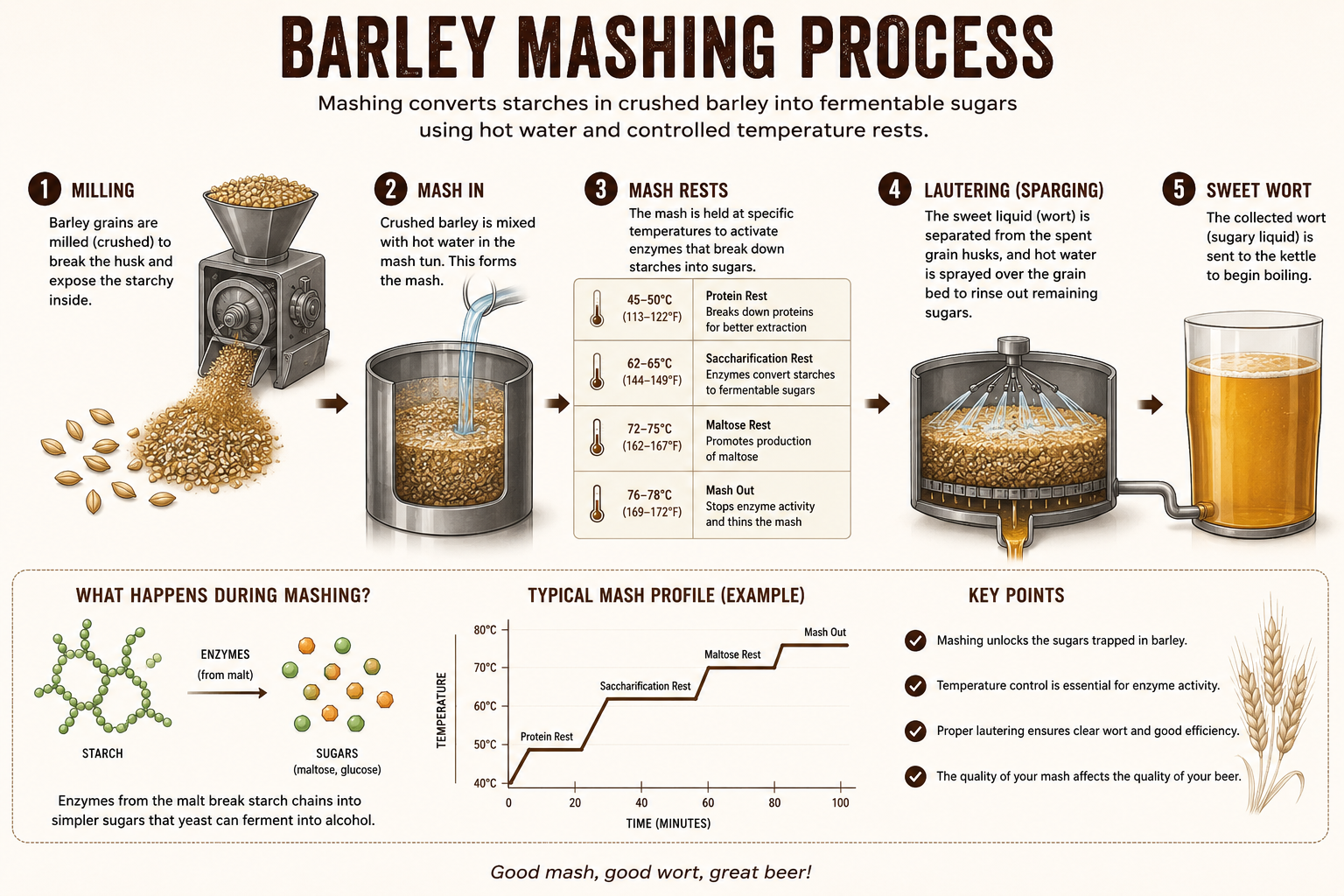
To mash is the verb used in the brewing trade to describe the process of malt extraction. Crushed grain is steeped in hot water so that the enzymes locked inside the husk can convert starches into fermentable sugars — the liquid drawn off afterwards is called wort, the foundation of every beer.
Infusion Mashing
In a typical infusion mash, crushed malt is placed in a mash tun and steeped for about 90 minutes in hot water at 64–67°C. This reactivates the enzymes naturally present in the grain’s husk, which break long starch molecules into shorter, sweeter chains that yeast can later ferment into alcohol.
The Temperature Rests
Brewers don’t just pick one temperature and walk away. Different enzymes work at different temperatures, so a mash is often held in a sequence of rests — each one coaxing out a particular quality from the grain.
- 45–55°C Protein Rest
- Breaks down proteins for better head retention and a clearer beer.
- 67–69°C Saccharification Rest
- Enzymes convert starches into fermentable sugars — the workhorse rest of any mash.
- 72–75°C Maltose Rest
- Promotes the production of maltose, the sugar most easily fermented by yeast.
- 76–78°C Mash Out
- Stops enzyme activity and thins the mash so the next step runs cleanly.
Lautering & Sparging
Once the rests are done, the sweet liquid is separated from the spent grain husks. Hot water is sprayed over the grain bed to rinse out as much sugar as possible — this is called sparging. The collected wort then heads to the kettle for the boil.
Why It Matters
- Mashing unlocks the sugars trapped in the barley.
- Temperature control is essential for enzyme activity.
- Proper lautering ensures a clear wort and good efficiency.
- The quality of your mash sets the quality of your beer.
Good mash, good wort, great beer!