
Bottling
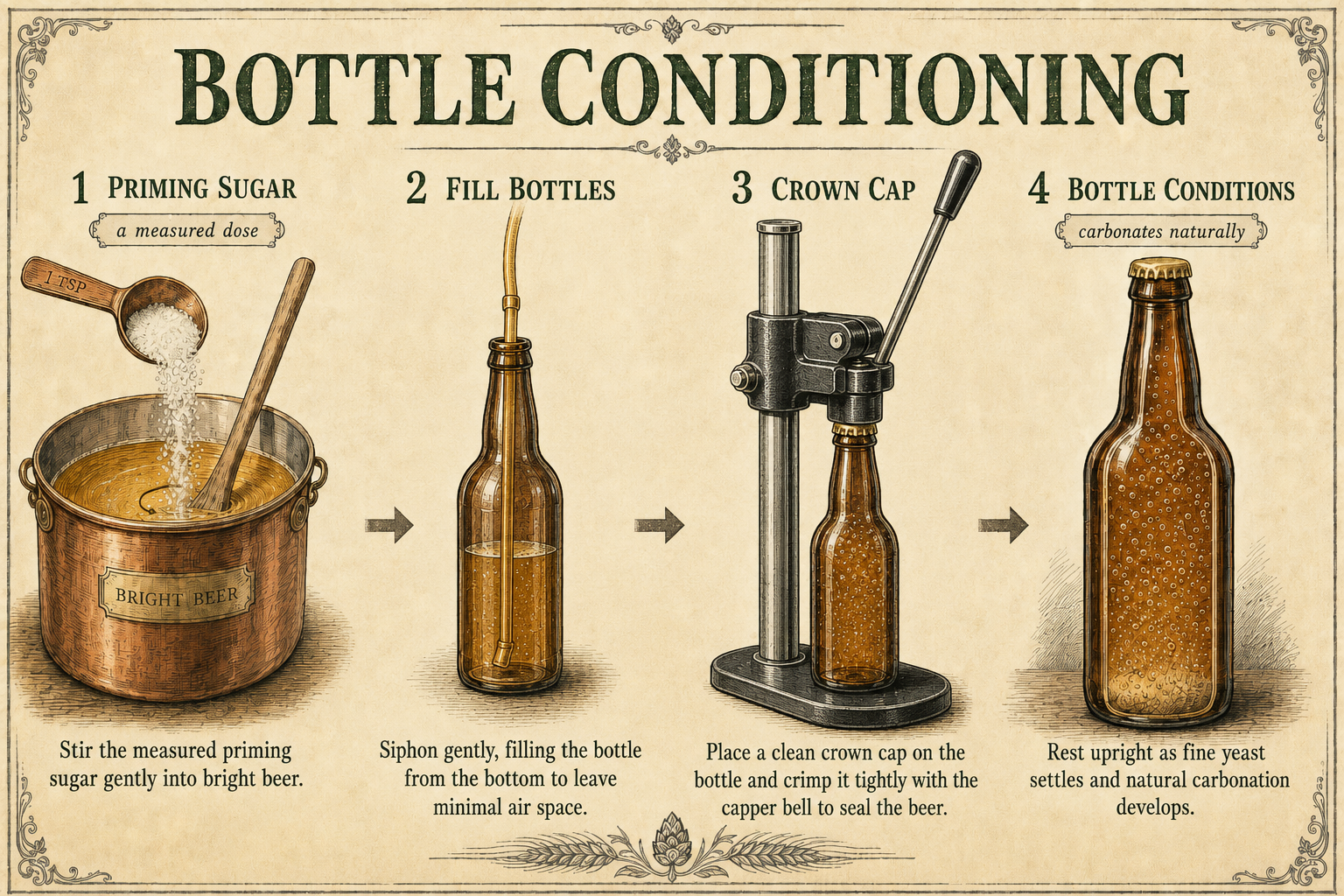
Bottle conditioning is the traditional way to put a finished beer into bottle and give it its sparkle. Rather than forcing gas in under pressure, the brewer leaves the work to the beer itself: a small, measured dose of sugar feeds the yeast still in suspension, and the carbon dioxide it produces is trapped in the sealed bottle to become the beer’s natural condition. It is the method that built the reputation of British bottled ales, and it asks for little more than patience and a steady hand.
Bottling is one arm of the packaging fork. Once the beer has been racked bright off its main yeast deposit, you must decide how to keep and serve it — into bottle here, or into keg or cask for those who prefer to draw their beer by the pint.
Priming Sugar
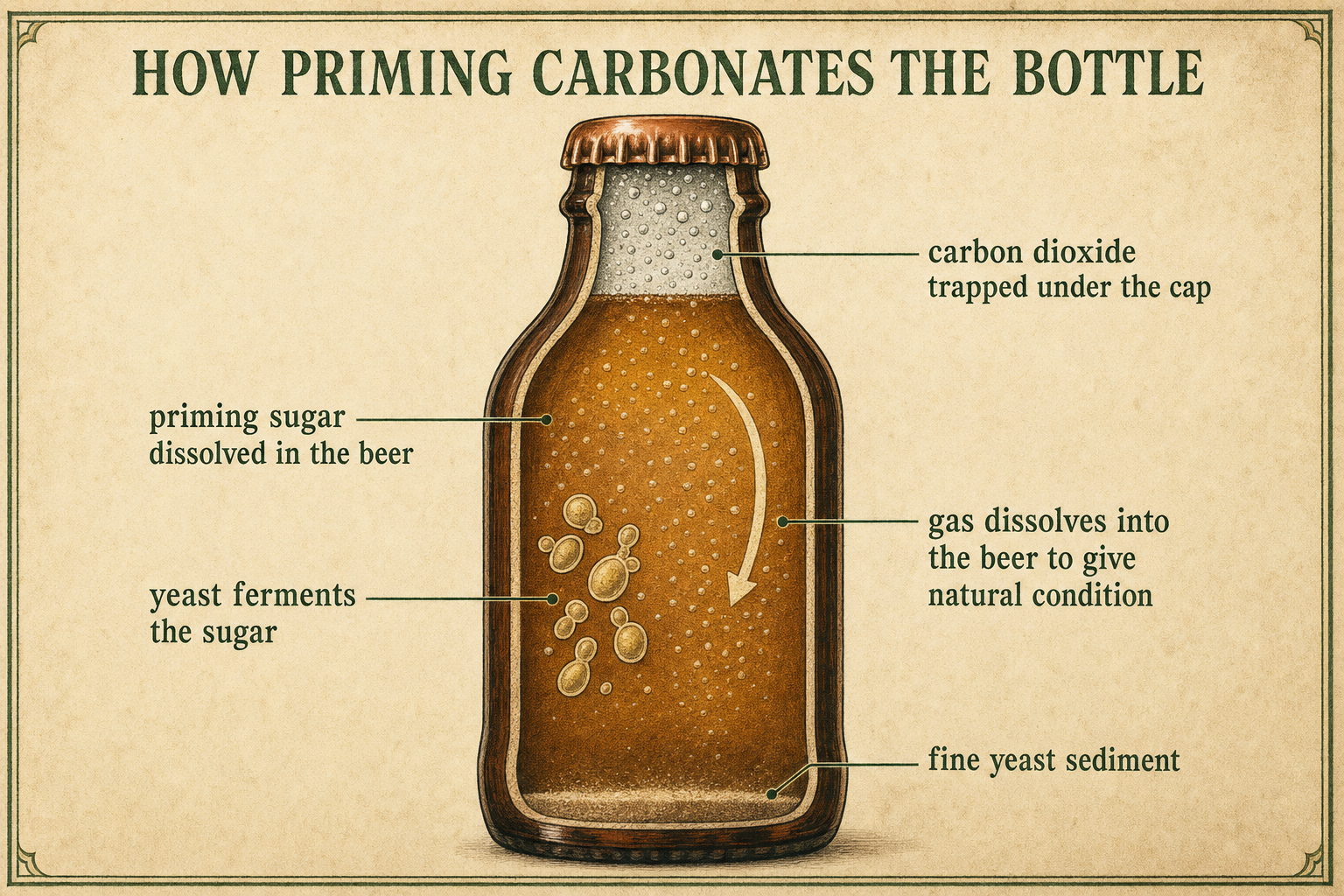
Priming sugar is a small, measured dose of sugar added to the beer at bottling. The handful of yeast cells still carried in the bright beer set upon it and ferment it inside the sealed bottle, and because the gas they make cannot escape, it dissolves into the beer as natural carbon dioxide — the fizz, or condition, you hear when the cap comes off.
The dose must be measured, and this matters more than any other part of the job. Too little and the beer pours flat and lifeless; too much and the yeast makes more gas than the glass can safely hold. Over-priming gushes on opening, and at its worst can burst a bottle — the brewer’s old dread of the bottle bomb
. A common rule of thumb is around 7–8 grams of sugar per litre for an ordinary ale; weigh it, never guess.
- 7–8 g/L Ordinary Ales
- A gentle, sessionable condition — the classic British bottled bitter or mild.
- 8–9 g/L Pale & Golden Ales
- A touch livelier, giving a brighter, more spritzy glass.
- 9–10 g/L Wheat Beers & Continentals
- High condition for a thick, lasting head — use stout glass and sound caps.
Dissolve the weighed sugar in a little boiled water and stir it gently through the whole batch before filling, so that every bottle carries the same share. Bottling each one from its own little pinch of sugar is fiddlier and far less even.
Bottling & Capping
The aim when filling is to disturb the beer as little as possible. Two things spoil a bottled beer above all others: oxygen, which staleness and cardboard flavours follow; and splashing, which drives that oxygen in. Run the beer in gently through a tube reaching to the bottom of the bottle, so it fills from below and rises without a churning, foaming fall.
Fill off the sediment: draw only the bright beer that sat above the yeast deposit in the racking vessel, leaving the murky last drops behind. Leave a small headspace of an inch or so beneath the cap — the yeast needs a little room, and an over-full bottle conditions poorly. Then seal each one at once with a crown cap, pressed home with a capping tool so the crimped skirt grips the lip of the bottle and holds the building pressure fast.
- Use only sound, undamaged returnable or crown-finish bottles — never thin, twist-off, or scratched glass.
- Sterilise bottles and caps thoroughly; a single neglected bottle can spoil on its own.
- Cap firmly and check the seal — a loose crown lets the condition slip away.
Secondary Fermentation in the Bottle
Sealed and primed, each bottle now becomes a tiny fermenting vessel. This secondary fermentation is slow and quiet — there is only a trace of sugar to work through — but it is the very step that distinguishes a bottle-conditioned, “real” bottled ale from a beer that has merely been gassed and pasteurised. The living yeast also continues to tidy up the flavour, drawing down stray rough notes as it goes.
Conditioning Time
Stand the bottles upright somewhere warm — around 18–21°C — for a couple of weeks to carbonate. Warmth keeps the yeast active and the condition builds steadily. When the beer pours with a lively head and a clean snap of gas, the carbonating stage is done.
It is then well worth moving the bottles somewhere cool and dark to mature. A few weeks of cold storage settles the yeast firmly, marries the flavours, and rewards the patient brewer with a rounder, mellower glass. Many a strong ale is better still after some months laid down.
The Yeast Sediment
Because the yeast does its carbonating work inside the bottle, a fine sediment is the natural and unavoidable mark of a bottle-conditioned beer — not a fault, but the signature of the method. It settles into a thin, packed layer at the base of each bottle once the beer has rested cool.
The skill is in leaving it behind. Pour with a steady hand in one smooth, unbroken movement, tilting the glass and watching the shoulder of the bottle; stop the instant the first wisp of yeast begins to creep towards the neck. Done well, you are left with a bright, clear glass and the sediment still sitting quietly where it belongs.
Prime it true, pour it steady — condition in the bottle, clarity in the glass.