
Fermentation
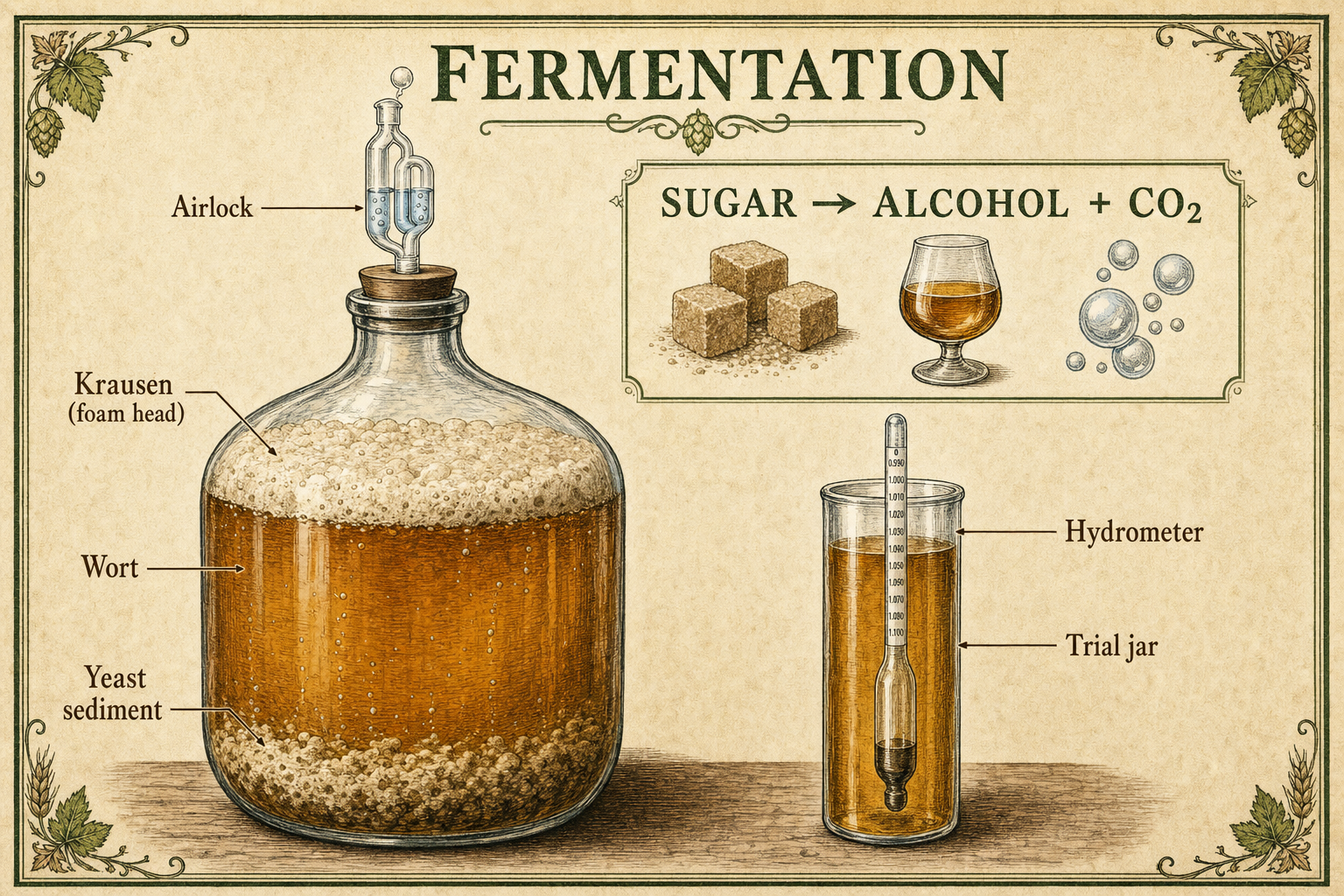
Fermentation is the heart of brewing. Everything before it — the malting, the mash, the boil — exists only to prepare a sweet, sugary liquid for this moment. Once the yeast is pitched, it sets about its work, feeding on the sugars dissolved in the wort and converting them into two things the brewer prizes above all: alcohol and carbon dioxide. What was merely sweet wort becomes, over the course of a week or so, recognisably beer.
Primary Fermentation
The first and most vigorous stage is called primary fermentation. Within a day of pitching, the yeast multiplies and gets into its stride, and the surface of the wort erupts into a thick, foaming head of dirty-cream froth known as the krausen. This is the yeast working hard, throwing off carbon dioxide and lifting proteins and hop debris to the top. The vessel hums quietly, the airlock bubbles steadily, and for the first few days the brewer can do little but watch with satisfaction.
Primary fermentation typically runs its course in about a week, though a strong beer or a cool fermentation may take longer. As the readily available sugars are used up, the krausen subsides, the bubbling slows, and the yeast begins to settle out of suspension and drop to the bottom as a sediment.
Temperature — Where Flavour Is Made
If fermentation is the heart of brewing, temperature is its conscience. More of a beer’s character is decided here than anywhere else, for it is during fermentation that the yeast produces the fruity, aromatic compounds called esters as well as a host of other subtle flavours.
Allow the wort to ferment too warm and the yeast grows stressed and hasty, throwing off harsh fusel alcohols and rough, solvent-like off-flavours that no amount of conditioning will fully cure. Hold it steady and cool, and the same yeast works cleanly, giving a rounded, well-mannered beer. Most ale yeasts are happiest somewhere around 18–22°C; lager yeasts cooler still. Steadiness matters as much as the figure itself — a wandering temperature unsettles the yeast and shows in the glass.
The Brewer’s Instruments
Two simple tools tell the brewer almost everything about what is happening inside the vessel.
- Airlock The Watchman
- A small water-filled trap fitted to the lid. It lets carbon dioxide escape while keeping air and contaminants out — and its contented, rhythmic bubbling is the sound that reassures every brewer the ferment is alive and well.
- Hydrometer The Gauge
- A weighted glass float that bobs in the wort to read its specific gravity — how dense the liquid is with dissolved sugar. As the sugars turn to alcohol the wort grows lighter and the hydrometer sinks lower.
Reading the Gravity
The hydrometer is what turns brewing from guesswork into measurement. Take a reading before the yeast goes in and you have the original gravity (OG) — a record of how much sugar the wort began with. Take another when fermentation has finished and you have the final gravity (FG). The difference between the two reveals how much sugar the yeast has eaten and, with it, the strength of your beer.
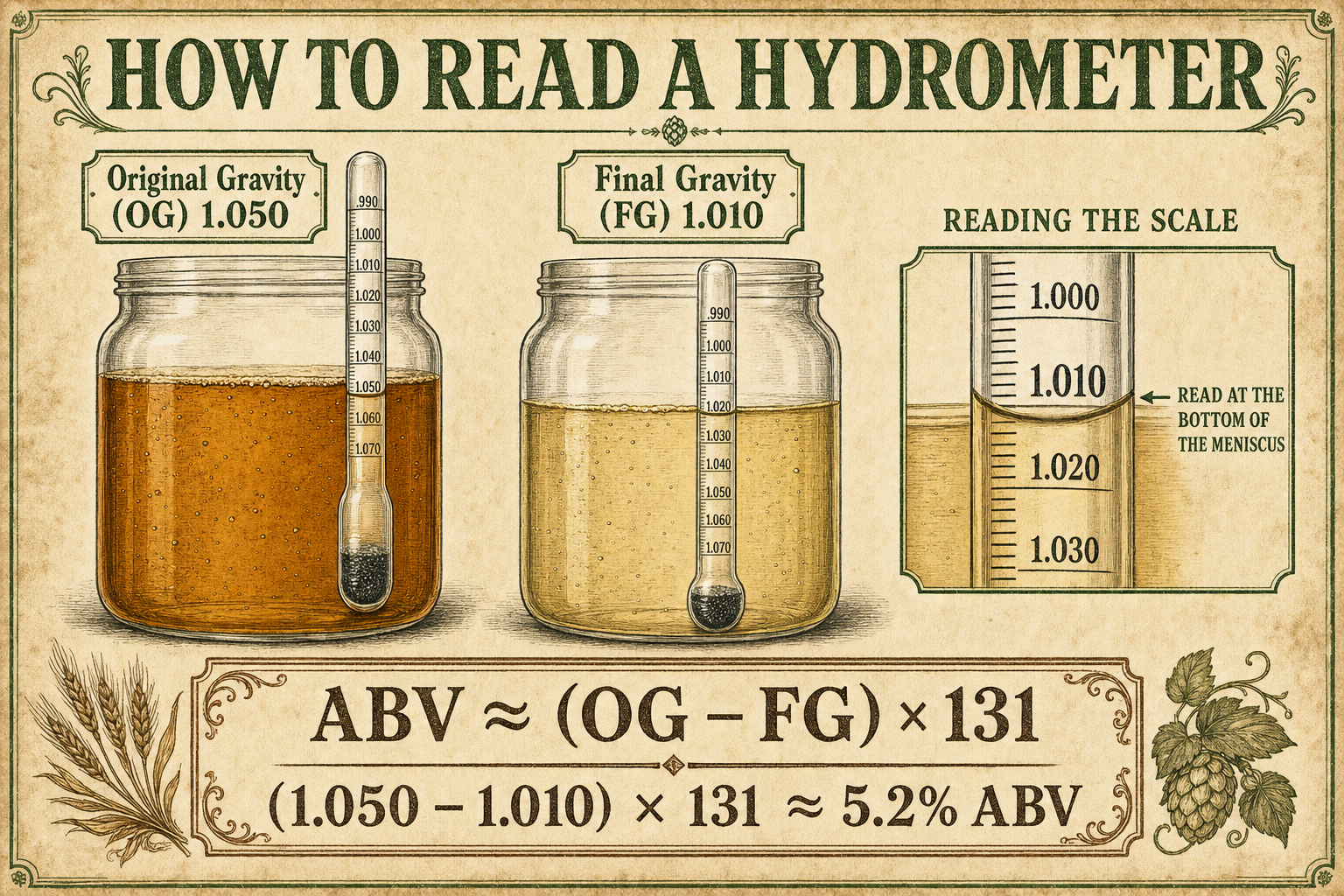
From that drop you can work out the alcohol by volume (ABV). A reliable rule of thumb is:
ABV ≈ (OG − FG) × 131
So a beer that started at an OG of 1.050 and finished at an FG of 1.010 has dropped 0.040, giving roughly 5.2% alcohol by volume — a sound, everyday strength.
Knowing When It Is Done
All the while, the carbon dioxide given off by the yeast continues to escape through the airlock, blanketing the beer and protecting it from the air. When the bubbling all but stops and the krausen has fallen, fermentation is nearing its end — but the airlock alone should never be trusted to call it.
The hydrometer has the final word. Fermentation is finished when the gravity holds steady — the same reading on two or three days running. Only then is the beer ready to be drawn off the yeast and moved on to the next stage, racking.
Patience in the ferment is repaid in the glass.