
Chilling
When the boil is done, the brewer is left with a kettle of wort at very nearly 100°C — sweet, sterile and quite useless until it is cooled. Yeast cannot be pitched into scalding liquid; it must first be brought down to pitching temperature, and the quicker that is achieved the better the beer will be. Chilling is the bridge between the heat of the brewhouse and the patient work of fermentation.
Why Speed Matters
A leisurely cool-down was once accepted as the natural order of things — the old breweries ran their wort across broad, shallow coolships open to the night air. But the modern brewer hurries the job, and for three good reasons.
The Cold Break
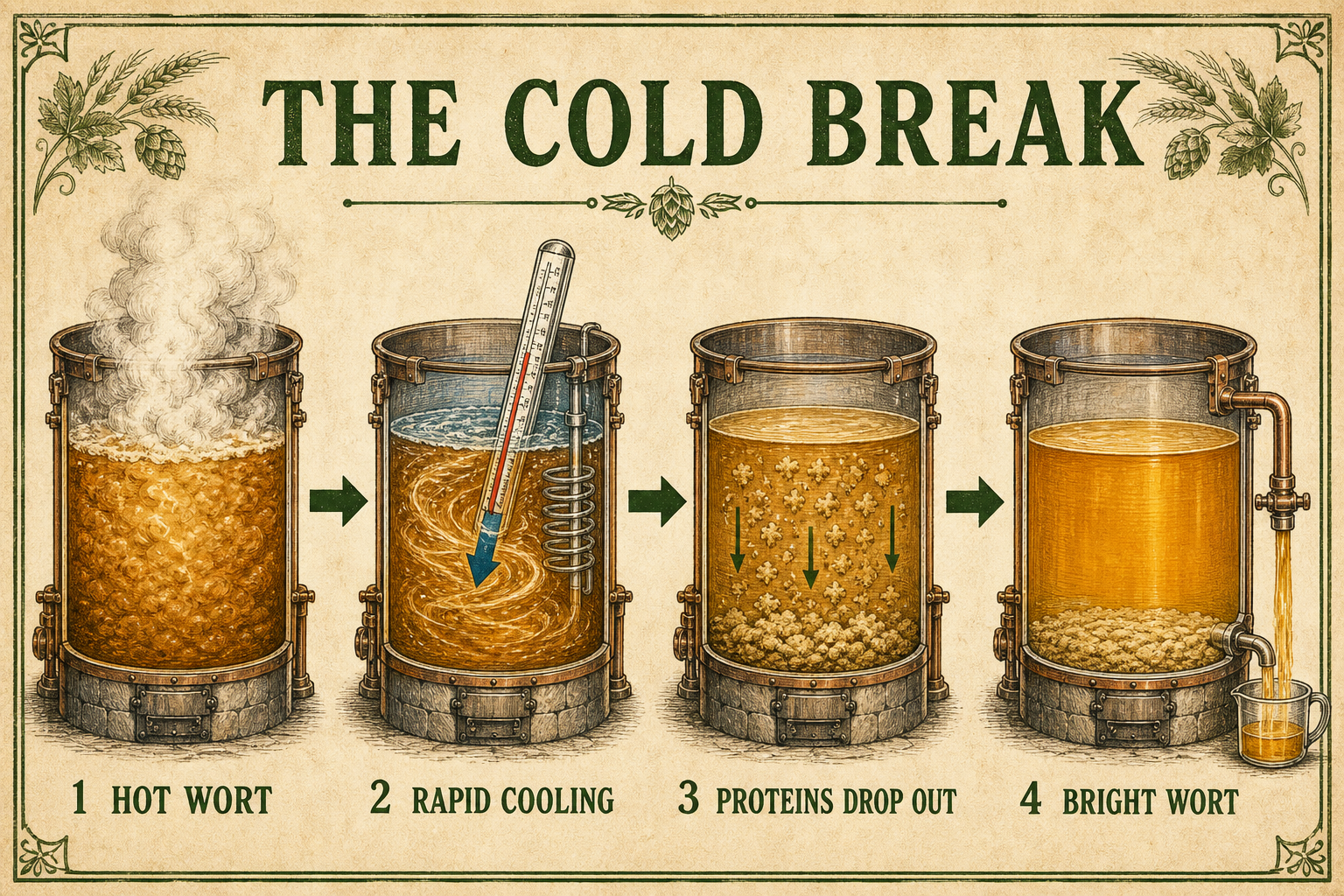
As the wort drops swiftly through the 60s and 50s, a cloud of proteins and tannins clumps together and falls out of suspension. This is the cold break — the partner to the hot break
that formed during the boil. A sharp, rapid chill produces a clean, decisive break, leaving behind a brighter beer that is less prone to the hazes and staling that trouble a sluggishly cooled batch.
A Narrow Window
The boil has left the wort sterile, but that purity is fleeting. Between the kettle and the moment the yeast takes hold, the wort is a rich broth with no defences — precisely the warm, sugary medium that wild yeasts and bacteria long to colonise. The longer it lingers in the danger zone of roughly 30–60°C, the greater the risk of infection. A swift chill shrinks that window and hands the wort to the yeast before any intruder can settle in.
Reaching Pitching Temperature
The final goal is simply a temperature the yeast will be happy in. Pitch too warm and the yeast races away, throwing off harsh, solventy flavours; too cold and it sulks and may never properly start. The target depends on the style:
- 18–22°C Ales
- Warm-fermenting top yeasts — the traditional British range, giving the fruity, rounded character of a classic ale.
- 8–14°C Lagers
- Cold-fermenting bottom yeasts — a much colder pitch for a clean, crisp finish, often beyond what tap water alone can reach.
The Methods
How a brewer gets there has evolved from the open coolship to a handful of neat appliances, each trading cost and effort against speed.
The Immersion Chiller
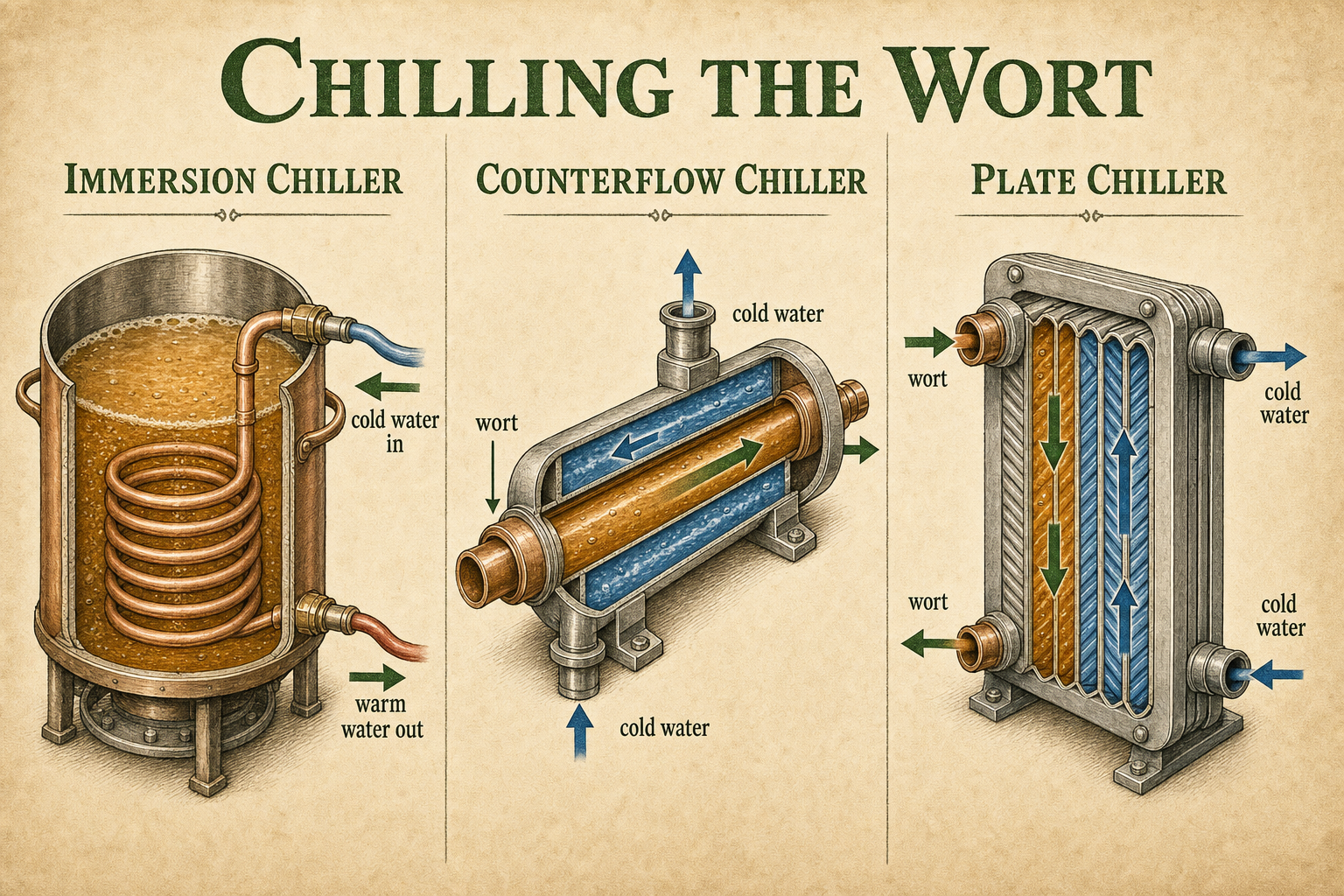
The simplest tool is the immersion chiller — a coil of copper or stainless tubing lowered straight into the hot wort. Cold water is run through the coil, drawing the heat out as it passes. Copper is the traditional choice, prized for carrying heat away quickly. It is forgiving, easy to clean and sterilised by the very heat of the wort it sits in, which makes it a firm favourite of the home brewer.
Counterflow & Plate Chillers
For greater speed the wort is set moving instead. In a counterflow chiller, hot wort runs down the inside of a long tube while cold water travels the other way around it — the two passing in opposite directions, so the wort always meets ever-colder water as it goes. A plate chiller achieves the same in a compact stack of ridged plates, with wort and water threading alternate channels. Both can take wort from boiling to pitching temperature in a single pass, but their tight interiors demand careful cleaning, for they cannot be inspected by eye.
The No-Chill Approach
Some brewers dispense with the apparatus altogether. The no-chill method runs the boiling wort straight into a sealed, heat-stable container and simply leaves it to cool overnight of its own accord. The sealed vessel keeps infection at bay while it falls slowly to room temperature, ready to pitch the next day. It saves water and equipment at the cost of time — a thoroughly practical compromise, and a quiet nod to the patience of the old coolship brewers.
Chill it fast, chill it clean — then call in the yeast.