
The Boil
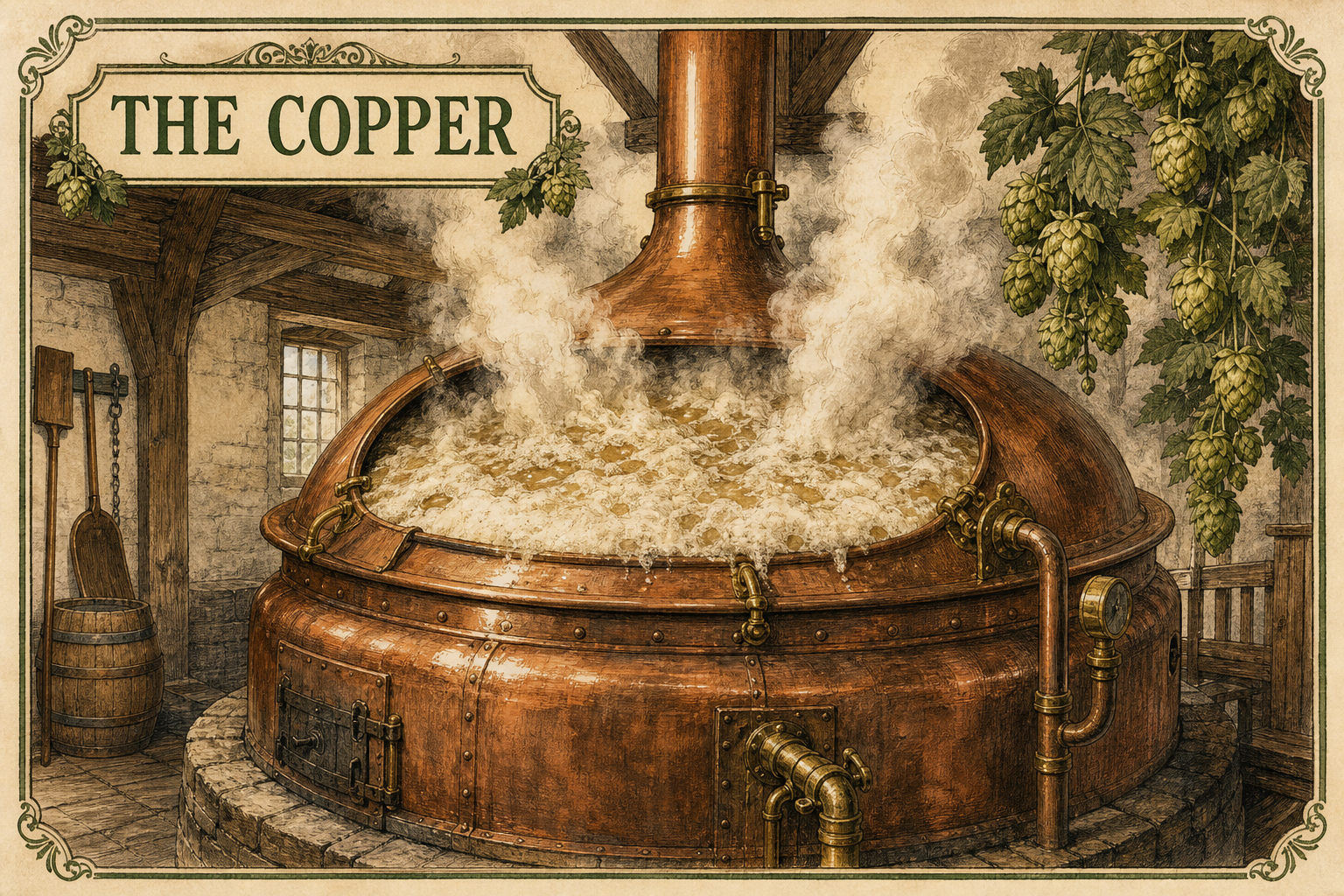
The boil is the brewer’s hour of transformation. The sweet wort that arrives from sparging is thin, cloudy and biologically alive with enzymes; an hour later it leaves the kettle clarified, sterilised, concentrated and bittered — ready at last to receive the yeast. For all the attention lavished on the mash, it is here that much of a beer’s character is truly settled.
The Copper
British brewers have long called the brew kettle the copper, after the metal from which these great vessels were traditionally made — copper conducts heat beautifully and resists the corrosion of long, hard boiling. The name has outlived the material: a modern copper may well be stainless steel, yet the word endures in brewhouses up and down the country, a small piece of living heritage. Whatever it is made of, its task is the same — to hold the wort at a hard, rolling boil for an hour or more.
Why We Boil
Boiling is not merely a matter of heating the wort; it does several essential jobs at once, and skip any one of them and the finished beer suffers.
- Sterilisation — a vigorous boil kills the wild yeasts and bacteria that would otherwise spoil the brew, leaving a clean canvas for the brewer’s chosen yeast.
- Stopping enzyme action — the heat denatures the mash enzymes once and for all, fixing the balance of fermentable and unfermentable sugars exactly as the brewer intended.
- Driving off DMS — dimethyl sulphide, a compound that lends an unwelcome note of cooked sweetcorn, is volatile and boils away on the steam. This is why the kettle is left uncovered and the boil kept brisk.
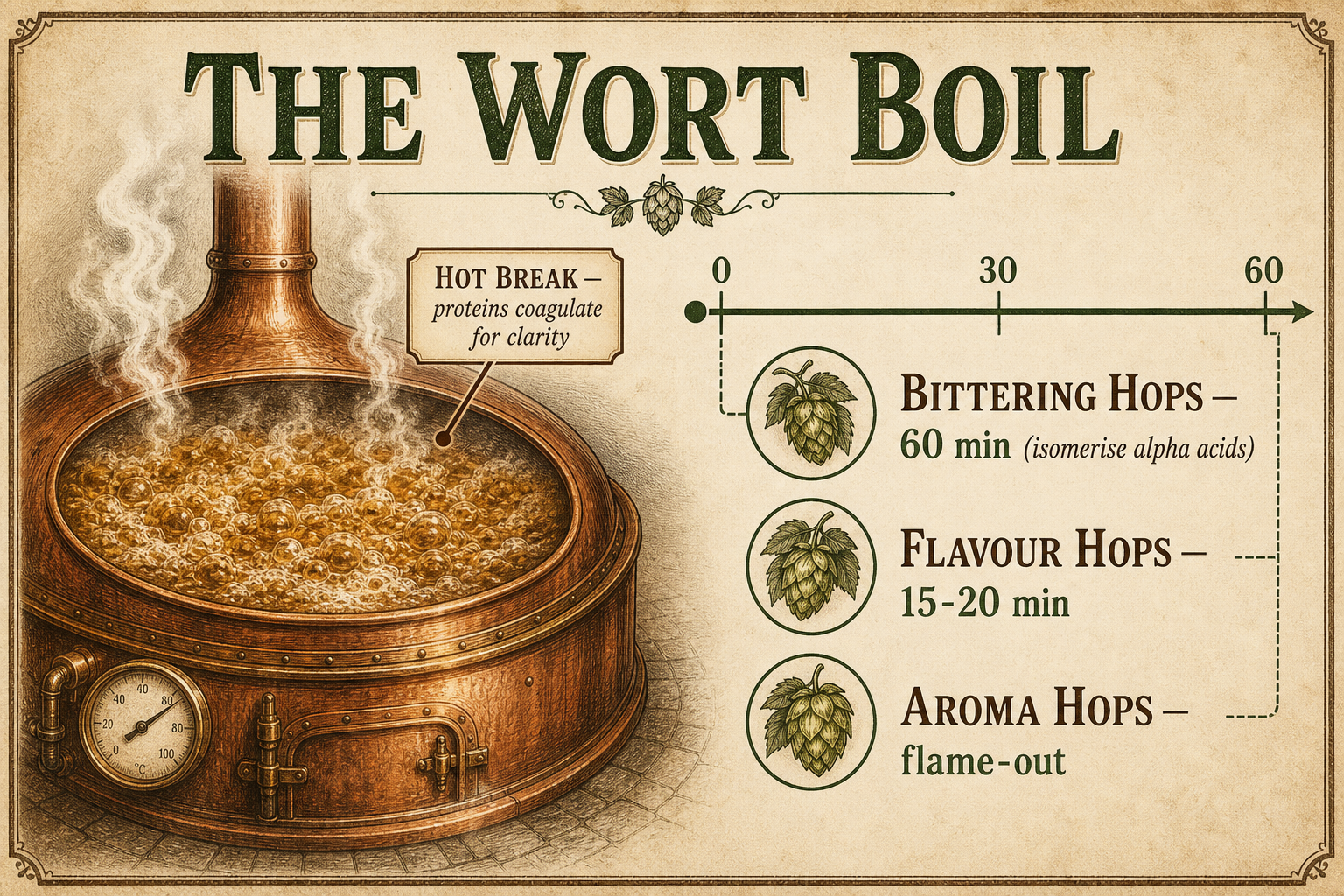
- The hot break — proteins and tannins coagulate under sustained heat and fall out as a fluffy, ragged sediment, leaving behind a clearer, more stable beer.
- Concentrating the wort — evaporation drives off excess water, raising the gravity and sharpening the flavour to its proper strength.
Hops & Their Timing
If the boil has a single moment of art, it is the timing of the hops. The same flower, added at different points in the hour, gives entirely different gifts — and the brewer’s hop schedule is, in effect, the recipe for a beer’s balance and aroma.
- ~60 min Bittering Hops
- Added early so the heat can isomerise the alpha acids into the soluble compounds that give beer its bitterness. The long boil extracts bitterness but boils off the delicate aromatics.
- ~15–20 min Flavour Hops
- Added in the middle of the boil for hop flavour — a balance of some bitterness with retained character, since not all the aromatic oils have yet been driven off.
- Flame-out Aroma Hops
- Added late, or right at the end, to preserve the volatile oils that give a beer its fragrance. Steeped briefly rather than boiled, they lend nose without harshness.
The principle is simple once grasped: time in the kettle buys bitterness but spends aroma. The bittering charge isomerises its alpha acids over a full hour; the aroma charge is held back to the last so its perfume survives into the glass.
A Good Rolling Boil
The boil wants to be vigorous — a true rolling boil, not a lazy simmer. Only a hard boil will produce a clean hot break, scrub out the DMS and isomerise the hops properly. A typical boil runs for 60 to 90 minutes; sixty minutes suits most ales, while a longer boil deepens colour and is favoured for certain traditional and stronger styles.
Boil hard, boil clean, and boil for the hops — the kettle rewards an honest fire.
As the time runs out the brewer makes the last hop addition, then cuts the heat. What follows next is chilling — the wort must be cooled swiftly so it can be pitched with yeast and the long work of fermentation can begin.
Hard boil, bright wort, well-hopped beer!