
Pitching the Yeast
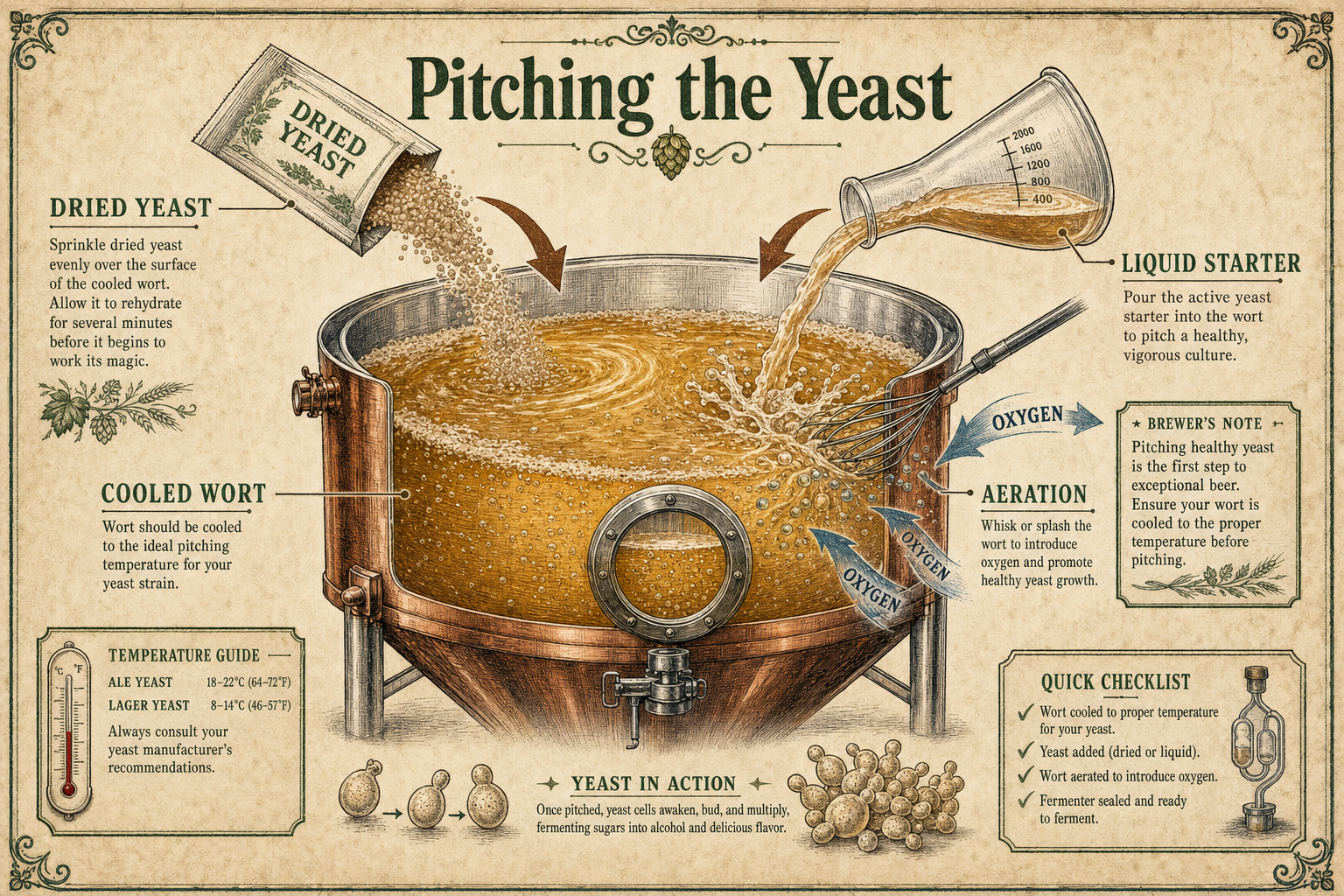
To pitch is the brewer’s word for adding the yeast to the cooled wort. It is the quiet turning point of the whole process: until this moment you have only sweet liquid, but once the yeast goes in, fermentation begins and the wort becomes a living brew. Get the pitch right and the rest of the fermentation looks after itself; rush it, and the yeast will let you know.
Pitching Rate — Enough Healthy Cells
The single most important thing about pitching is putting in enough healthy yeast. Too few cells — under-pitching — forces the yeast to overwork itself simply to build up its numbers before it can begin fermenting in earnest. A stressed yeast produces harsh, estery and sometimes sulphurous off-flavours, and a sluggish start leaves the door open to spoilage organisms.
As a rough guide, a standard 23-litre batch of ale wants something in the order of 200 billion healthy cells — broadly one well-made liquid-yeast pack or starter, or one to two sachets of dried yeast. Stronger worts and lagers want a good deal more. The aim is always the same: a generous, vigorous population ready to take command from the first hour.
Preparing the Yeast
Yeast comes to the brewer in two forms, and each rewards a little preparation before it meets the wort.
- Dried Rehydrating
- Sprinkle the sachet over a small volume of cooled, boiled water at around 25–30°C and leave it for 15–30 minutes. This lets the dormant cells take up water gently through their walls before they are plunged into sugary wort, which would otherwise shock and kill a portion of them.
- Liquid Making a Starter
- Liquid yeast is best woken and multiplied beforehand in a starter — a small batch of weak (around 1.040) sterilised wort. Pitched a day or two ahead and swirled often, the yeast builds its numbers and proves itself active, so it hits the main wort already in its stride.
Aeration — The One Welcome Breath of Oxygen
Throughout brewing, oxygen is the enemy: it stales hops and oxidises finished beer. Pitching is the single exception. Before the yeast can multiply it must build new cell walls, and for that it needs dissolved oxygen. The cooled wort should therefore be aerated — splashed, rocked, whisked, or fed pure oxygen through a stone — just before or just after the yeast goes in.
Oxygen the wort, never the beer.
Once fermentation is under way the rule reverts: from then on the brew must be kept sealed away from the air.
Pitching Temperature
Yeast dislikes a sudden change of temperature, so wort and yeast should be brought close together before they meet. Pitch into wort that has been chilled to the working range — roughly 18–22°C for most ales, and cooler still for lagers — and let the prepared yeast be at much the same temperature. Pitching too hot drives off harsh fusel flavours; pitching too cold leaves the yeast slow to rouse. Matching the two gives a clean, prompt start.
The Lag Phase
For the first several hours after pitching, nothing much appears to happen. This is the lag phase — far from idle, the yeast is busy taking up oxygen, building cell walls and multiplying to fill the wort before it turns to fermenting the sugars. A healthy pitch shows a visible head of foam, or krausen, and a steady stream of bubbles within 12 to 24 hours.
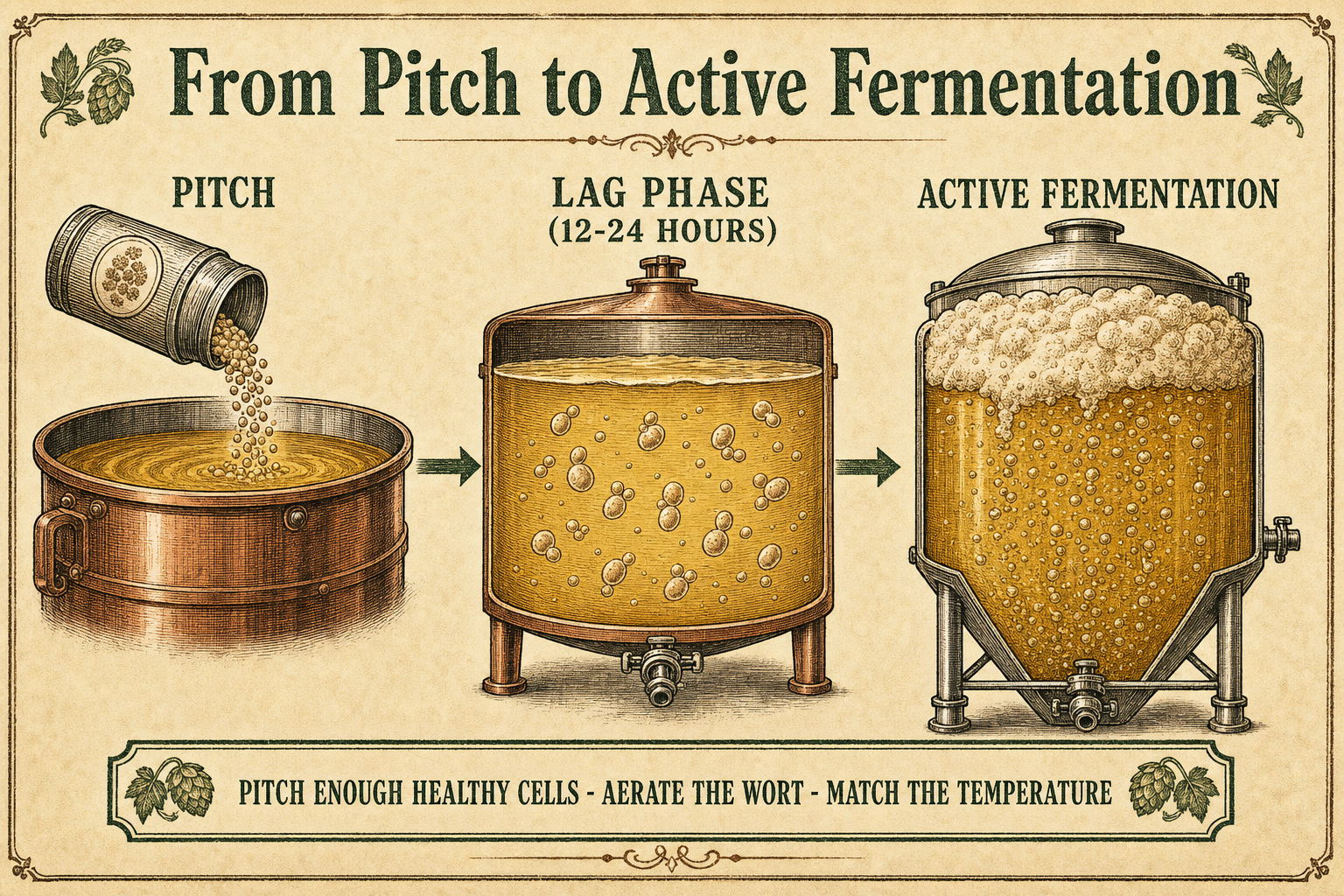
If the lag stretches well beyond a day, it is usually a sign that too little yeast was pitched, that the wort was poorly aerated, or that the temperature was wrong — the three pillars of a good pitch, each leaning on the others.
Why It Matters
- Pitch enough healthy cells — under-pitching stresses the yeast and breeds off-flavours.
- Rehydrate dried yeast, or build a starter for liquid yeast, before it meets the wort.
- Aerate the cooled wort well — the only time oxygen is welcome.
- Match the pitching temperature of yeast and wort for a clean, prompt start.
Pitch well, and the brew makes itself.