
Malt
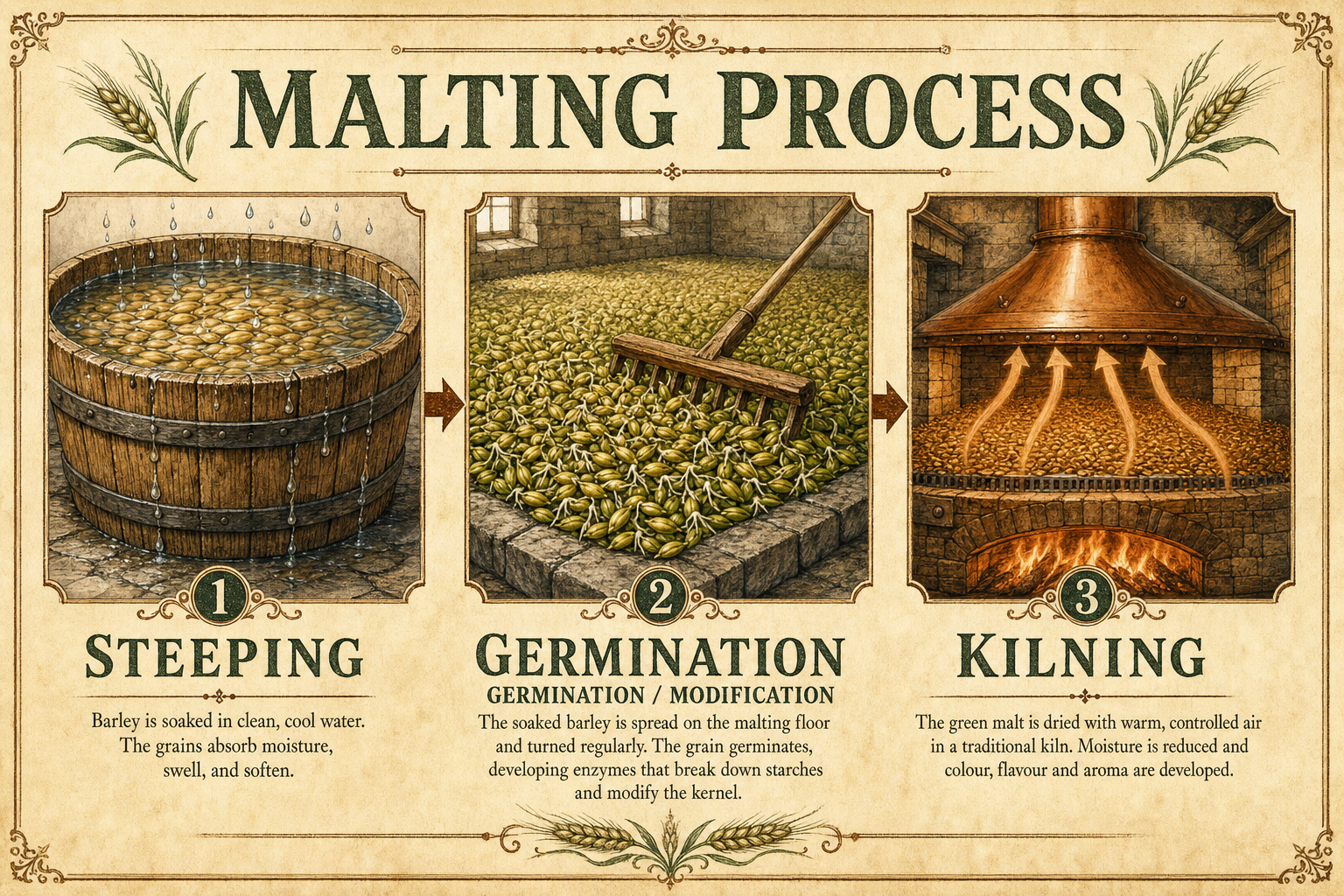
Malt is barley persuaded to begin growing, then stopped. It is the maltster who stands between the field and the brewhouse, taking the dormant grain that the farmer has grown — see barley for where it comes from — and coaxing it through a careful imitation of spring. The aim is to wake the sleeping grain just far enough to rouse its enzymes and soften its starchy heart, then halt it with heat before the plant can spend that store on growing. What remains is friable, sweet-smelling malt, ready to be milled and sent to the mash.
Steeping — Waking the Grain
Malting begins at the steep. The barley is immersed in water, drained, and immersed again over two or three days, so that the grain slowly takes up moisture — rising from around twelve per cent to nearer forty-five. Between immersions the grain is rested in air, for the living germ must breathe as it drinks. As the moisture works inward the grain wakes from its dormancy: the chemistry of germination stirs, and the maltster judges the moment when the corns are plump and just beginning to chit
, showing the first white tip of root.
Germination & Modification
The steeped grain is now spread out to grow. As the germ begins to push out its rootlets, it releases enzymes that set to work on the hard, glassy endosperm — the starchy food store that fills most of the grain. The brewer’s word for this softening is modification: the once-flinty endosperm is broken down to a crumbly, mealy state that the teeth can chalk and the mash can readily extract. Crucially, the enzymes that will later convert starch into fermentable sugars are developed here and laid down in the grain, ready to be reawakened in the mash tun.
The art lies in restraint. The maltster lets the grain grow far enough to modify fully, but not so far that the shoot consumes the very starch the brewer wants. Traditionally this was the heart of floor malting: the green malt laid in a thick bed on a cool stone floor, turned by hand with wooden shovels and rakes day and night for a week or more, to keep the grain even, aired and free of matting. It is patient, skilled, physical work, and the few floor maltings that survive are prized for the character they give to traditional ales.
Kilning — Heat, Colour & Flavour
When modification is complete the green malt must be stopped, or it would simply grow into a plant and squander its goodness. It is moved to the kiln, where warm air is drawn through the bed to dry it and arrest growth. But kilning does far more than preserve: it is here that the maltster develops colour and flavour. Gentle drying gives a pale malt; greater heat browns the sugars and proteins within the grain, deepening both hue and taste. The temperature and duration of the kiln are the maltster’s palette, and from them flows the whole range of malts the brewer draws upon.
The Range of Malts
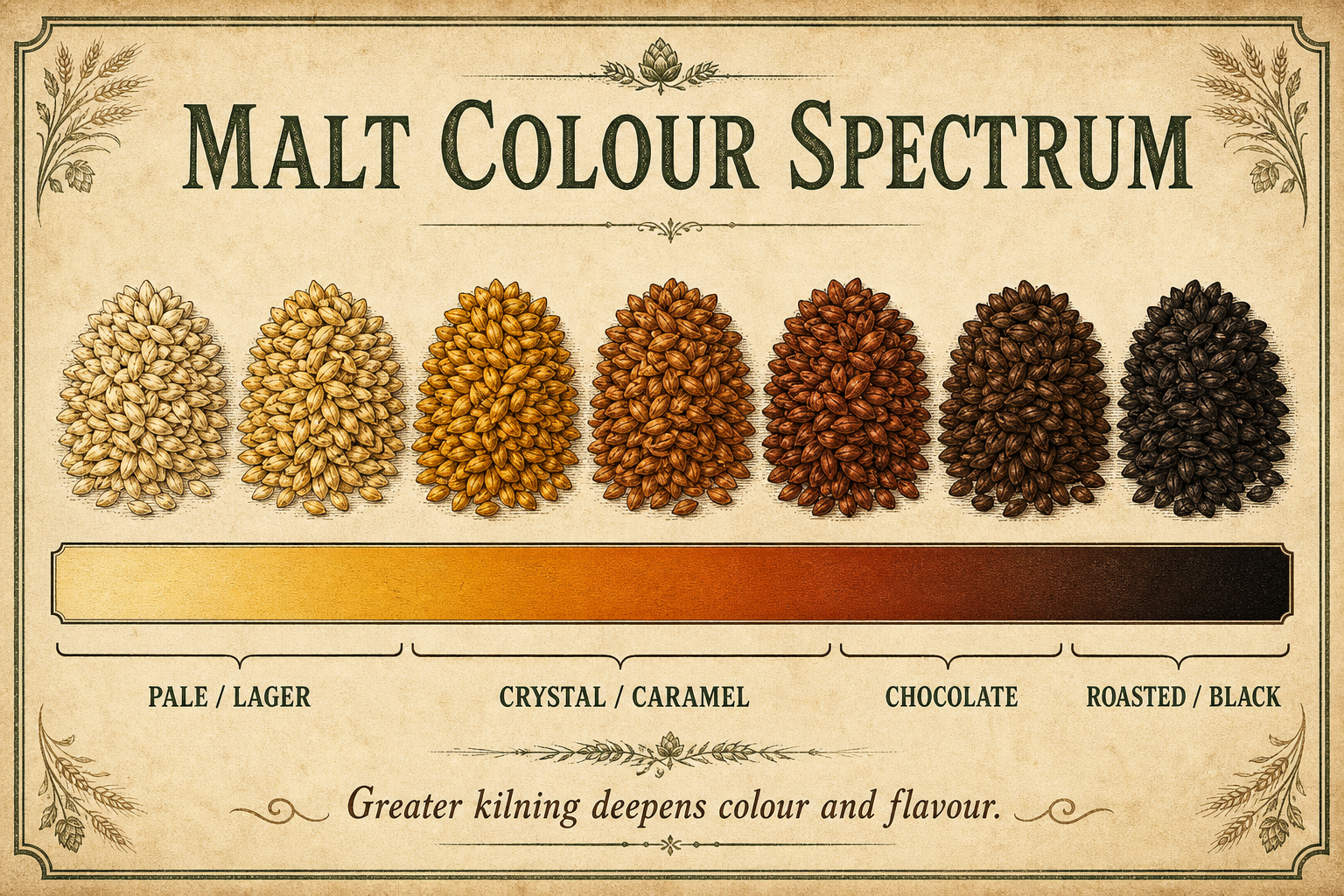
Although every malt begins as the same steeped, germinated grain, the kiln divides them into families. The deeper a malt is taken, the more colour and roasted character it lends — but the less of its starch-converting power survives the heat. Brewers therefore build a recipe from a generous base malt, seasoned with smaller amounts of the darker, more characterful sorts.
- Pale Pale & Lager Malts
- The base of nearly every beer. Kilned gently to keep colour light and enzyme power high — these supply the bulk of the fermentable sugar.
- Amber Crystal & Caramel Malts
- Stewed moist before kilning so the sugars set glassy inside the husk. They give amber and red hues, body, and a sweet, toffee-like flavour.
- Brown Chocolate Malts
- Roasted further to a deep brown, lending nutty, coffee-and-cocoa notes to milds, porters and brown ales.
- Black Roasted & Black Malts
- Taken nearly to charring. Used in small measure for the colour and dry, roasted bite of stouts — a little goes a very long way.
Milling into Grist
Finished malt arrives at the brewery whole and must be cracked open before it can give up its sugars. This is milling: the grain is passed through a malt mill that crushes the kernel to expose the mealy endosperm while leaving the husk as intact as possible. The result is the grist — the crushed malt that goes to the mash. A good crush is a balance: fine enough that hot water can reach the starch and the enzymes can work, yet coarse enough that the broken husks form a loose filter bed for the sweet wort to run clear.
Good malt is half the brew.