
Use An Airlock
An airlock — also called an air trap, or just a trap — is fitted to the neck of a fermenter to let fermentation gas out without letting air in. "Bubbler" is sometimes used for any airlock, but strictly it is one type; the common types are pictured below.
What Is an Airlock?
Nearly all winemakers use one, as do beer makers who ferment in a sealed vessel. Fermentation produces carbon dioxide, which has to escape; oxygen from the atmosphere must not get in, because it spoils wine and beer. The airlock is a one-way valve: a bend of water that gas can bubble out through but air cannot bubble back through.

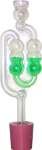
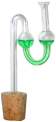
How Does an Airlock Work?
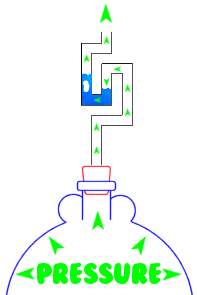
The vessel is sealed apart from the airlock. As the yeast ferments the sugars in the liquid it releases carbon dioxide, and the pressure inside rises. When it exceeds the pressure outside, a bubble of gas is forced up through the water in the airlock. Once the two have equalised the bubbling stops.
While fermentation is running the pressure inside is never lower than the pressure outside, so nothing flows backwards and the liquid never meets the atmosphere.
Setting Up an Airlock
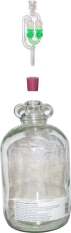
Airlocks take a minute to set up and need little attention in use.
- Half-fill the airlock with water.
- Gently push the airlock into a bung (rubber or cork).
- Gently push the bung into the neck of the demijohn or fermenter.
- Leave to ferment. Check from time to time that the water in the airlock has not evaporated and top up as necessary.
Tips
Make Your Own Airlock
A length of syphon tube pushed through a bung, with its free end standing in a jar of water beside the fermenter, does the same job. This is the blow-off tube — the usual arrangement for beer makers, particularly in America, who ferment in a sealed vessel. It is also the tidier option when a vigorous wine must keeps foaming up into a standard airlock.
What Liquid to Use
Some brewers fill the airlock with a steriliser rather than plain water — hydrogen peroxide, or water with a heavy dose of sodium metabisulphite dissolved in it. This lowers the already small chance of a wild yeast getting in through the airlock. But if the vessel is knocked, or the airlock is pulled out carelessly, the liquid can drop into the wine, and a dose of steriliser does far more harm than a splash of water. Plain water is the safer fill.